What if your forehead could look smoother without losing your ability to raise your brows in surprise or knit them in concentration? That balance is possible, and it hinges on precise technique, careful dosing, and an understanding of how your individual muscles work.
I have treated thousands of foreheads over the years, and the most satisfied patients share a common outcome: they keep their expressions, yet the etched-in lines fade to a whisper. The route there is part medical science, part artistic judgement. Below, I’ll walk you through how to achieve a natural finish, what to expect, and how to avoid the usual pitfalls.
The promise of movement with smoother skin
Forehead lines form from repeated movement of the frontalis muscle, the broad sheet that elevates your brows. When the skin is resilient and collagen-dense, those lines fade quickly after an expression. With time and motion, they begin to linger, eventually etching into static wrinkles. Botox therapy, properly dosed and placed, reduces the muscle’s pull enough to soften lines while preserving mobility. That is the sweet spot.
Botox for facial lines works best when it is approached as a conversation between your anatomy and your goals. A patient who relies on their brows for expression at work or on stage needs a lighter touch than someone who prefers a smoother, more polished look. Forehead treatment is not a standard recipe, it is a custom mix.

How Botox relaxes muscles, in plain terms
Botox is a purified botulinum toxin type A used in medical aesthetics and dermatology. It temporarily blocks the signal between nerve endings and muscle fibers at the neuromuscular junction. The result is partial muscle relaxation. Think of it as turning down the volume rather than muting the speaker. That partial relaxation decreases the repetitive folding that leads to lines, promoting skin smoothing and a fresher appearance.
The clinical effects are local. Modern formulations do not “travel” through the body. Spreading issues, when they occur, are almost always the result of superficial placement, high dilution, or heavy-handed massage right after treatment. Precision injection and post-procedure habits are the safeguards.
A quick map of the upper face
If the forehead were a stage, three main actors share the scene:
- Frontalis: lifts the brows, creates the horizontal lines across the forehead. Glabellar complex: corrugator and procerus muscles, pulls the brows inward and down, responsible for “11s.” Orbicularis oculi: circular muscle around the eye, creates crow’s feet.
When we treat forehead lines, we must respect the tug-of-war between frontalis and the brow depressors. Over-weakening the frontalis without softening the glabella can drop the brows. Under-treating the frontalis while heavily treating the glabella can make the brows feel heavy. Facial balancing matters.
The natural-movement philosophy
My approach for natural movement rests on three principles.
First, use only the amount of product required to change the skin’s behavior. The goal is botox subtle results, not a mask.
Second, distribute the product so the muscle relaxes evenly. A few well-placed points beat a carpet of superficial injections.
Third, reassess at two weeks. The first pass aims for 70 to 80 percent of the desired effect. The top-up is for fine-tuning symmetry, not for playing catch-up after an overcorrection.
This philosophy mirrors how the frontalis behaves. It is thinner in the lower third near the brows and thicker in the upper half. Heavier dosing low on the forehead invites droopy eyelid risks and uneven eyebrows. Lighter dosing low, more conservative unit calculation overall, and a careful injection depth produce a natural finish.
What a good consultation covers
A thoughtful Botox evaluation sets the tone for everything that follows. I watch how you animate: how high you can lift, whether your left brow routinely travels higher, if your skin creases more in the center or laterally. I palpate to feel muscle thickness. Then I ask about your routines. Do you lift heavy at the gym? Do you film content under unforgiving lighting? Do you sleep on your side, creating sleep wrinkles that mimic expression lines?
Good botox consultation tips include bringing reference photos of how you like your brows to sit, listing prior botox sessions with dates and doses, and noting any history of droopy eyelid or uneven eyebrows after previous treatments. Those details guide the assessment.
The injection plan, translated from clinic to plain language
Botox injection technique in the forehead is not one-size-fits-all, but a safe starting framework exists. For a natural result:
- Start higher, finish lighter: Most injections sit above the mid-forehead, with feathering laterally to avoid a telltale shelf at the hairline. Respect the brow zone: Keep a buffer of at least 1.5 to 2 centimeters above the eyebrows to protect lift unless you deliberately aim to lower a high arch. Angle and depth matter: A shallow intramuscular placement with the bevel up reduces spread. Going too superficial risks bumps, too deep risks unnecessary diffusion. Map before you inject: Botox muscle mapping marks areas of dominant creasing and weaker zones. Symmetry correction relies on seeing the baseline clearly.
Units vary based on muscle thickness, gender, metabolism, and desired effect. As a rough range for the frontalis alone, many patients do well between 6 and 14 units for a natural-movement plan, spread across 6 to 10 points. Pairing with the glabella often adds 8 to 20 units, depending on strength. These numbers are starting frames, not promises. The art lies in placing less where you need motion and more where the lines are stubborn.
The effects timeline at a glance
Botox gradual results unfold in stages. Day two to three, some people notice a soft “release.” Day four to seven, movement reduction becomes clear. By days 10 to 14, botox peak results typically appear. Fine lines look softer, makeup sits better, and the forehead feels “quieter” when lifting.
Botox settling time is not just about the toxin binding; your brain also adjusts to the altered feedback. Many patients describe a short botox fatigue feeling in the first week, less about energy and more about recalibrated effort to make expressions. That sensation passes quickly as the central nervous system adapts.
How long botox effects last varies, but three to four months is common for the forehead. A subset of patients holds results for five to six months, particularly after several treatment cycles when wrinkle prevention has kept skin smoother between sessions. On the flip side, high metabolic activity and frequent intense exercise can shorten longevity.
Avoiding the frozen look
Frozen results usually come from one of three issues: too many units for your anatomy, injections placed too low across the brow support zone, or an imbalance between the frontalis and the glabellar complex. Sometimes it is all three.
A natural result requires leaving some functional fibers untouched, especially laterally. That is why a meticulous injector will ask you to raise and frown mid-procedure. They are looking for real-time feedback, not just following a dot map. If you have heavy lids or a naturally low brow, the plan will be lighter still, with thoughtful glabella dosing to avoid pulling the brows down.
Common concerns and how we handle them
I keep a running mental list of botox common questions because the same worries pop up in almost every consult.
- Will my eyebrows become uneven? Mild asymmetry is common pre-treatment. Botox symmetry correction can help, but it must be done conservatively. A small top-up on the heavier side at day 14 often evens things out. Can I still look surprised? Yes. Aim for a partial lift. Leaving the upper lateral frontalis active preserves that “surprised” arc without deep lines. What about a droopy eyelid? True eyelid ptosis is rare with careful technique. It typically stems from product diffusing into the levator region after very low injections or aggressive massage. If it happens, it usually improves over 2 to 6 weeks. We avoid it by respecting the no-rub rule and the brow buffer. Will it hurt? Small pinches, brief and tolerable. An ice pack or a dab of topical anesthetic makes it easier, but most patients manage without. Is there an immune response over time? Rarely, antibodies can form, usually after high-dose, frequent sessions. Thoughtful spacing and using the lowest effective dose reduce that risk.
The appointment, step by step
Patients appreciate knowing exactly what happens. Here is the streamlined botox procedure guide for a forehead-focused visit.
- Assessment and mapping: dynamic evaluation, photos, goal-setting, and a clear plan for the frontalis with or without glabella. Cleansing and prep: remove makeup and sunscreen, disinfect the area, cold pack if you prefer. Injection: small, precise points, often 6 to 10 in the frontalis, a few in the glabella if indicated, angled to the appropriate depth. Recovery: light pressure if a pinpoint bruise appears, no massage. You can return to most normal activities immediately. Follow-up: a check at two weeks for botox top-up timing and micro-adjustments if needed.
These sessions take roughly 15 to 25 minutes, with the bulk devoted to assessment rather than needles.
Post-care that protects your result
The first 4 to 6 hours are about minimizing spread. Stay upright, avoid hats that compress the forehead, skip heavy sweating and facials until the next day. Beyond that, your usual skincare is fine. The only consistent caution is to avoid rubbing the area aggressively for 24 hours.
Combining Botox and skincare yields better texture. Retinoids, vitamin C, daily sunscreen, and periodic chemical peels or microneedling complement botox skin smoothing by improving epidermal turnover and collagen support. Just separate treatments by about 1 to 2 weeks to avoid confusion about any temporary redness or swelling.
When lines are static before you start
Dynamic wrinkles disappear when you relax your face. Static wrinkles remain at rest. Botox for dynamic wrinkles works beautifully, but static lines sometimes need more. Here is where strategy matters.
For shallow etched lines, partial muscle relaxation plus time can allow the skin to remodel, especially if you support the process with skincare and light resurfacing. For deeper clefts, we may add micro-droplet hyaluronic acid, resurfacing lasers, or radiofrequency microneedling. A staged plan respects the skin’s biology. Botox is the foundation, not always the full structure.
Who makes a good candidate
Most healthy adults with forehead expression lines qualify. Candidacy factors include realistic goals, willingness to accept partial movement reduction, and no neurologic conditions that would complicate evaluation. Pregnancy and breastfeeding remain off-label caution zones. Prior allergic reactions to botulinum toxin are rare but disqualifying.
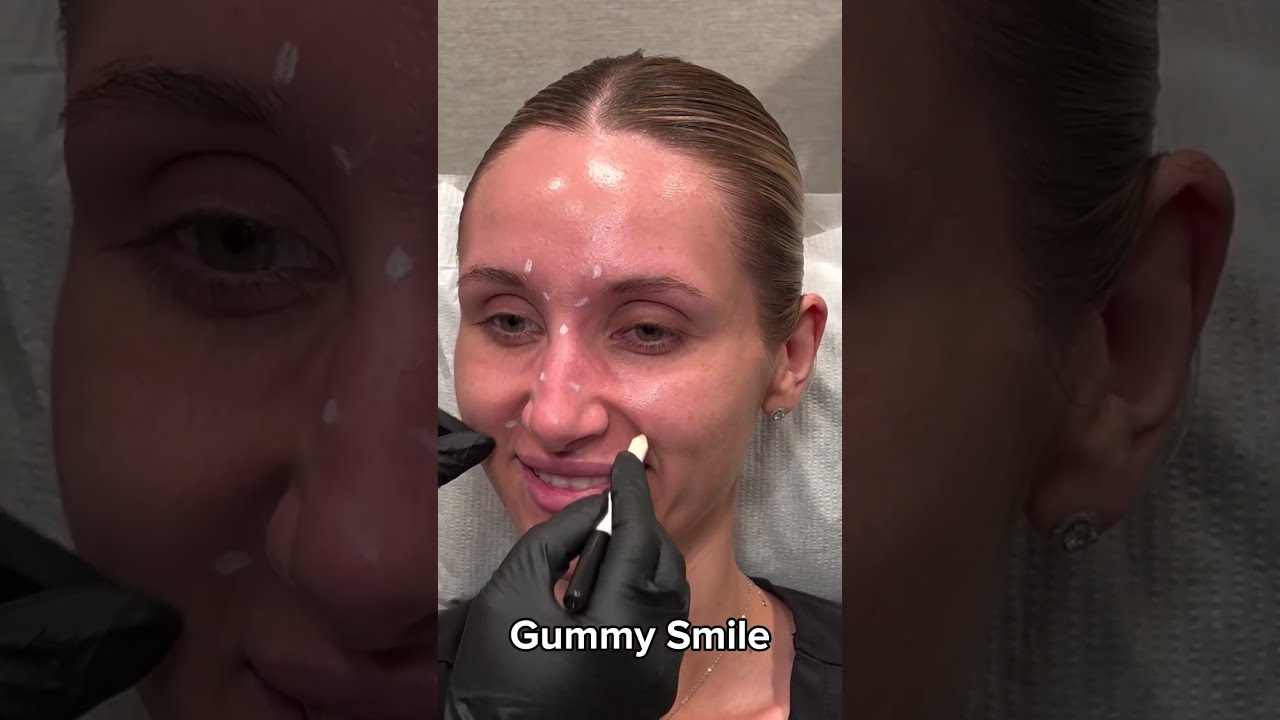
Younger patients seeking botox for early wrinkles often need very small doses spaced longer apart. Mature skin benefits, but expectations should account for elasticity changes. For both groups, wrinkle prevention is part of the value, because every month of reduced folding gives your collagen a break.
How forehead treatment fits into full-face balancing
A forehead should not be treated in isolation if the rest of the face tells a different story. Botox for upper face often pairs forehead and glabella, sometimes lateral crow’s feet. In some cases, softening bunny lines on the nose prevents compensatory scrunching that can otherwise appear after forehead smoothness.
Lower face planning is separate, but it has balance implications. For example, botox around the chin can soften an orange-peel look, and botox around the jaw can ease clenching if bruxism is an issue. If someone relies on frontalis activation to keep their eyes open comfortably, we tread lightly above and avoid stacking too many lower face relaxers in the same session. Harmony is the aim.
Side effects and safety, without sugarcoating
The common nuisances are pinpoint bruising, light headache, and temporary pressure at injection sites. These settle quickly. Rare events include droopy eyelid, prominent eyebrow asymmetry, and unintended spread. Allergic reactions are very uncommon but possible. An experienced injector manages risk with anatomy-informed technique and conservative dosing, and manages issues when they arise, including advising on apraclonidine drops for mild lid ptosis or strategic micro-dosing to rebalance an uneven result.
If you experience unusual muscle twitching or a prolonged headache, call your clinician. True adverse events are best handled early with a plan.
Making results last longer
Why botox wears off is straightforward: nerve endings sprout new connections over weeks to months. You can influence the experience, but not override biology. Hydrated skin and daily SPF help the finish look better for longer. A consistent botox routine over several cycles often stretches longevity because the skin creases less, so lines re-form more slowly.
Heavy cardio and heat exposure immediately after treatment might shorten the initial bind. That is why I recommend postponing intense exercise for a day. Alcohol on the same day can increase bruising, so it is smart to save a drink for the next evening. These lifestyle considerations are minor tweaks, not life changes.
When less is smarter
There are faces where restraint is the only way forward. If you have a low brow and heavy upper lids, aggressive frontalis dosing will make you look tired. If you communicate heavily with your eyebrows, slamming the frontalis will blunt your personality. And if photography plays a large role in your work, a touch more motion reads as more human on camera. The right plan respects those realities.
A brief word on other areas and conditions
Patients often ask about botox for facial sculpting and medical indications during a forehead visit. A few examples illustrate the range:
- Botox for jaw clenching, bruxism, and teeth grinding: dosing the masseters reduces hypertrophy and pain, with a side benefit of facial slimming in wide jaw lines. Expect chewing fatigue for a week or two and a softer jaw angle over 6 to 8 weeks. Botox for facial spasms and blepharospasm: precise dosing calms involuntary contractions around the eyes. This is medical, not cosmetic, and requires specialized assessment. Botox for platysmal bands: in the neck, tiny aliquots soften vertical bands. Forehead plans may need adjustment when the neck is treated to preserve overall balance.
Even if the day’s target is the forehead, it helps to consider the whole picture before placing a single drop.
Warren MI botoxWhat a natural forehead feels like after
By week two, you will notice you can still raise your brows, only with less effort and fewer creases. Makeup glides over previously stubborn lines. Photos show light reflecting more evenly across the forehead. The most common feedback I hear: “I look rested, not different.” That is the essence of botox natural finish.
If you sense uneven pull, a single eyebrow lifting higher, or a hint of heaviness, these are the micro-adjustments we handle at your follow-up. The aim is not perfection on day one, it is refinement by day fourteen.
Cost, dosing, and the myth of a standard unit count
People want a single number. Real faces resist that simplicity. Unit calculation depends on your anatomy, gender, how much motion you want to keep, and whether we are also treating the glabella and crow’s feet. Lighter natural plans in the forehead alone may use under 10 units, while heavier motion-dampening plans can double that, always placed strategically. What matters most is distribution and depth, not chasing a round number.
Spacing between botox sessions usually runs three to four months. Some patients prefer quarterly upkeep to maintain a consistent look, while others return when lines begin to reappear. Neither approach is wrong. Consistency smooths the year, flexibility respects budget and lifestyle.
My pro tips for smooth, animated foreheads
- Communicate how much expression you want to keep. Say it plainly. “I need to raise my brows on camera,” or “I prefer a polished look.” That line sets the dose range. Start conservative if it is your first time. We can always add. Undoing an overcorrection takes time you cannot accelerate. Keep the glabella in the conversation. Even if you came for forehead lines, paired treatment often improves both lift and smoothness. Respect the two-week check. That is where natural results become tailored results. Support your skin. Sunscreen daily, a retinoid at night, and consider periodic gentle peels or microneedling to complement botox rejuvenation.
When expectations and biology disagree
Every now and then, a forehead will not tolerate the low-dose freedom a patient wants. Very strong frontalis, heavy brows, or prior brow lift surgeries can change the rules. In these cases, we outline trade-offs clearly: a softer look with slightly reduced motion, or more motion with a few lines remaining. Patients appreciate honesty. The right answer is the one you can live with in everyday mirrors and under real lighting.
Final thoughts from the treatment chair
The best Botox results for forehead lines come from restraint, foresight, and respect for the way your face communicates. Ask for an injector who assesses, not just injects. Look for someone who talks about botox injection angles and depth without drowning you in jargon, who understands botox facial balancing across the upper face, and who will see you at two weeks to fine-tune. With that team and that plan, you can expect smoother skin, a calmer canvas for makeup, and expressions that still feel like you.
If your goal is natural movement without the freeze, the path is clear: map the muscle, place small amounts thoughtfully, reassess once the dust settles, and support the skin while the muscle rests. It is not magic, it is good medicine practiced with a light hand.
